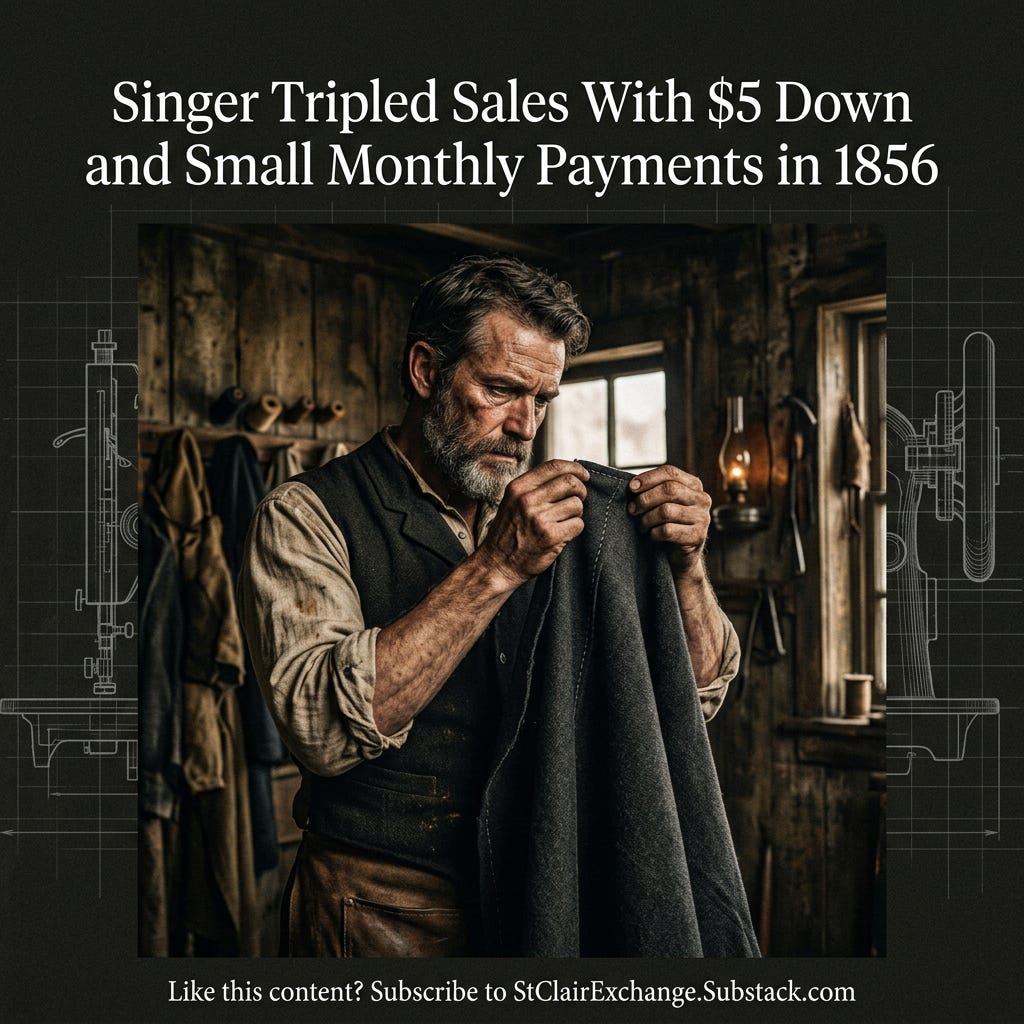
A Singer sewing machine cost about $100 in the 1850s, which matched the average family’s seasonal income.
In 1856, partner Edward Clark introduced a purchase plan requiring ‘just’ $5 down followed by small monthly payments.
Sales tripled the following year.
This strategy established the modern model for consumer installment buying across major industries.
This sales technique is now common practice: An independent craftsman sells high-end tools for $1,200 up front and struggles to close deals. By splitting the cost into four quarterly payments of $300, buyers purchase immediately without changing their monthly cash flow.
Why it happens: High up-front costs trigger loss aversion and friction in decision-making. Spreading payments over time lowers the immediate financial hurdle, making the purchase feel manageable within a standard budget.
The lesson: Break large prices into structured installment options. Removing the initial cost barrier expands your market without discounting the actual value of your product.
Enjoy the day!
Matthew Doehring
Repost or Share this article to help others and follow for more AI News, Fun Facts, Helpful Hacks and more.
Originally published on St. Clair Exchange: https://stclairexchange.substack.com/p/singer-tripled-sales-with-5-down